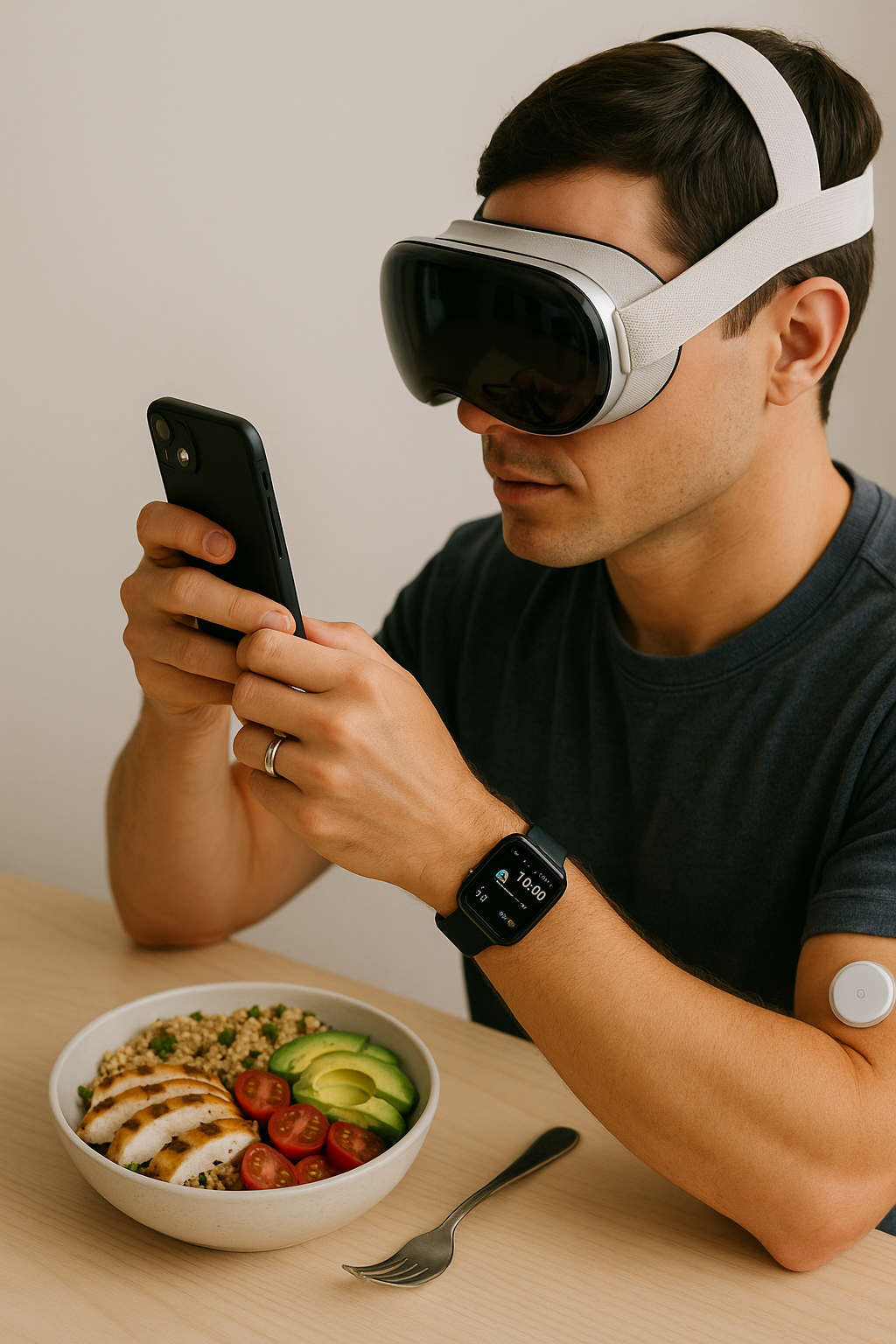
Longevity/Wellness has come in and out of fashion for decades. At its core, it stems from humanity’s age-old desire for immortality or at least eternal youth. It’s no surprise that most people on Earth want to live longer, feel younger, and stay healthier.
Some might argue that associating human health with the concept of 'trends' feels dehumanizing - as if commodifying something so inherently human. But the reality is, trends drive both innovation and sales. Just out of quick curiosity, below are some of my thoughts on the consumer health trackers, loosely grouped into generational waves.
Where it all kind of started e.g. Fitbit, MyFitnessPal
This early wave focused on step counting and manual calorie tracking—simple and straightforward. Features were largely limited to setting basic target metrics, with little personalisation. Calorie burn estimations were frequently criticised for inaccuracy. Despite the rise of similar products and falling sales, Fitbit managed to be acquired by Google for a staggering $2.1 billion USD in 2021.
Mainstream e.g. Apple Watch, Flo, Headspace
This generation marked a shift from basic trackers to more holistic wellness tools. The Apple Watch has become a dominant force in wearables, setting a new benchmark for the industry and significantly impacting traditional watchmakers in the process. Meanwhile, health tech companies built app-native platforms catering to specific areas such as meditation (Headspace), menstrual health (Flo), and therapy. These tools were designed to be accessible and appealing to the general consumer.
Biohacking e.g. Whoop, Oura, CGM, Cal AI
This wave reflects a move towards high-precision, data-driven wellness. Products in this category target users interested in optimising recovery, sleep, glucose levels, and overall performance. Advances in machine learning and deep learning have improved predictive insights, enabling continuous, non-invasive monitoring. While some may argue these tools are excessive—especially for non-athletes—they represent a growing market segment that prioritises detailed physiological feedback - even for non athletic individuals. (influencers)
Future e.g. Neural Link or any brain implants
Looking ahead, future wearables may go beneath the surface—literally. Brain-computer interfaces like Neuralink aim to track and interact with neural activity in ways traditional devices cannot. These technologies promise to unlock an entirely new category of health data and interaction, potentially becoming the next "iPhone moment" and redefining how we interface with the world.
- https://www.freethink.com/biotech/precision-neuroscience-bci?utm_source=tldrnewsletter
- https://www.wsj.com/tech/apple-brain-computer-interface-9ec69919?st=Utxf3y&reflink=desktopwebshare_permalink&utm_source=tldrnewsletter